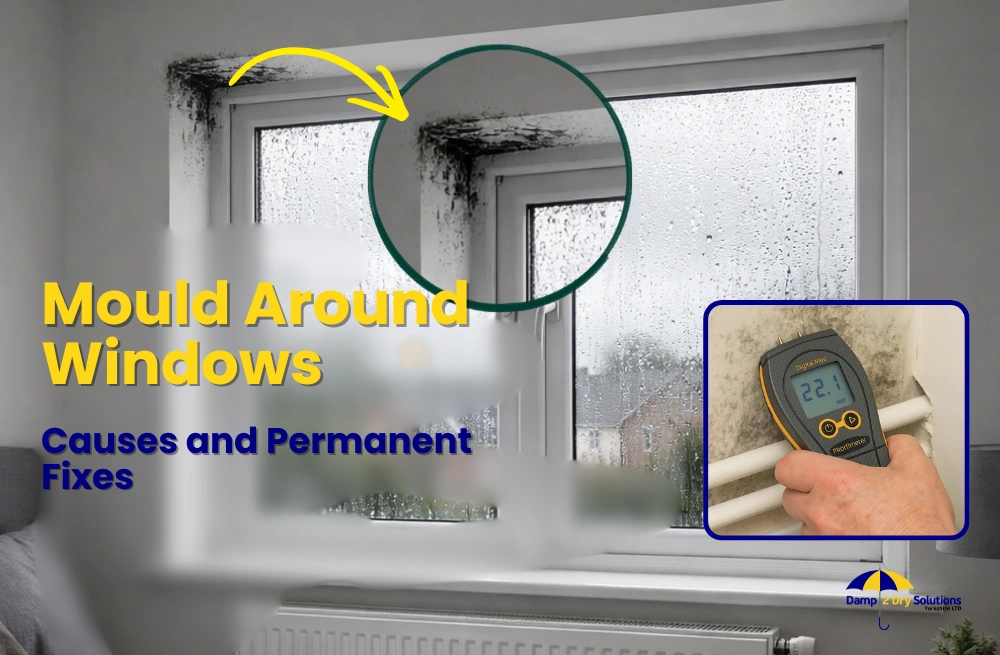
Mould around windows is one of the most common problems in UK homes. It often starts as small black spots on silicone sealant or the corners of plaster, then gradually spreads.
While many homeowners assume it is “just condensation”, recurring mould should not be ignored. In some cases, it can signal deeper insulation issues, failed seals or even penetrating damp.
This guide explains:
- Why mould forms around windows
- How to tell if it is condensation or damp
- What permanent fixes actually work
- When to seek professional help
Why Windows Are a High-Risk Area for Mould
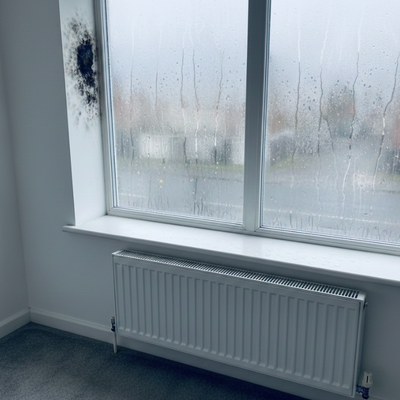
Windows are naturally colder than walls. During autumn and winter, warm indoor air hits the cold glass surface. When this happens, moisture in the air turns into water droplets. This process is called condensation.
If that moisture sits on frames, sills or plaster regularly, mould spores begin to grow.
In the UK, several factors increase the risk:
- Cooler outdoor temperatures
- Airtight modern homes
- High indoor humidity from cooking, showering and drying clothes
- Limited ventilation during winter
Even new double glazing does not eliminate this risk entirely.
What Mould Around Windows Usually Looks Like
Mould around windows often appears as:
- Black or dark green spotting on silicone sealant
- Discolouration in the top corners of window reveals
- Staining on painted plaster
- Mould growth on rubber glazing seals
- Peeling paint near the frame
If caught early, it may wipe away. If left untreated, it can stain plaster and spread to surrounding walls.
When mould is accompanied by bubbling plaster, soft patches, or damp staining beyond the frame, further investigation is needed.
The Main Causes of Mould Around Windows
1. Surface Condensation

This is the most common cause.
When indoor humidity is high and surfaces are cold, water collects on the glass and surrounding frame. If wiped away daily but allowed to return consistently, mould growth becomes likely.
Bedrooms are especially vulnerable because breathing overnight increases moisture levels in closed rooms.
2. Cold Bridging Around the Window Reveal
Cold bridging happens when part of the structure allows cold air to transfer inside more easily.
Around windows, this can occur due to:
- Poor insulation in the cavity
- Gaps between frame and wall
- Metal lintels transferring cold
- Thin plasterboard around reveals
Cold spots attract condensation even when the rest of the room is dry.
3. Poor Ventilation
Modern UK homes are more airtight than older properties. While this improves energy efficiency, it can trap moisture indoors.
Common ventilation issues include:
- Closed or blocked trickle vents
- Extractor fans not working properly
- Internal doors always shut
- Lack of air movement behind curtains or blinds
Without airflow, moisture lingers around window areas.
4. Failed Window Seals or External Defects
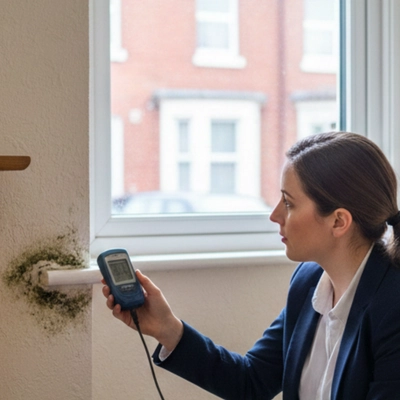
Sometimes mould is not purely internal.
Check for:
- Cracked external sealant
- Damaged pointing around frames
- Failed double glazing units
- Water entering through cracked render
If moisture is penetrating from outside, cleaning alone will not resolve the problem.
Condensation or Structural Damp? How to Tell the Difference
Homeowners often ask: “Is this just condensation or something more serious?”
Here is a simple comparison:
Likely Condensation If:
- Mould appears mainly in winter
- It wipes away easily
- It forms overnight
- Other windows show similar signs
Possible Structural Damp If:
- Only one window is affected
- Plaster feels soft or crumbly
- There are tide marks on the wall
- Mould spreads beyond the reveal
If unsure, a damp inspection provides clarity.
Why Cleaning Alone Does Not Fix Window Mould
Bleach and anti-mould sprays remove visible growth. They do not remove the moisture source.
If humidity levels remain high or insulation is inadequate, mould will return within weeks.
Repeated cleaning can also:
- Spread spores into the air
- Damage paint and plaster
- Mask an underlying defect
Permanent solutions focus on moisture control, not surface treatment.
Permanent Fixes That Actually Work
Improve Ventilation
Simple improvements can reduce condensation significantly:
- Keep trickle vents open
- Use extractor fans during cooking and showering
- Leave doors slightly open for airflow
- Avoid blocking vents with curtains
In properties with ongoing humidity issues, Positive Input Ventilation systems may help regulate air circulation.
Reduce Indoor Moisture Levels
Lowering humidity is essential.
Practical steps include:
- Dry clothes outdoors where possible
- Use a condenser dryer rather than air-drying indoors
- Keep lids on pans while cooking
- Maintain steady background heating
Sudden temperature drops increase condensation risk.
Address Cold Bridging
If cold spots persist around the reveal, insulation improvements may be required.
Options can include:
- Thermal plasterboard upgrades
- Insulated reveal boards
- Checking cavity insulation gaps
A professional survey identifies whether insulation defects are present.
Repair External Defects
If water ingress is suspected:
- Reseal external joints
- Repair cracked render
- Replace failed glazing units
- Repoint damaged brickwork
These repairs prevent moisture entering from outside.
Health Risks of Mould Around Windows
Mould spores can affect indoor air quality.
While small amounts may cause no immediate harm, ongoing exposure can contribute to:
- Respiratory irritation
- Asthma flare-ups
- Persistent coughing
- Allergic reactions
Children, elderly residents and those with respiratory conditions are more vulnerable.
Addressing mould early reduces long-term health risk.
Is Mould Around Windows Covered Under Warranty in New Builds?
In new build properties, mould may fall under:
- Developer responsibility during the first two years
- Structural warranty coverage if caused by insulation defects
However, condensation linked purely to lifestyle factors may not be covered.
If you suspect poor workmanship or insulation gaps, an independent damp survey provides evidence before raising concerns with the developer.
When Should You Call a Damp Specialist?
You should consider professional advice if:
- Mould keeps returning despite ventilation improvements
- Plaster becomes soft or discoloured
- A musty smell develops
- Only one window shows persistent issues
- You suspect insulation or structural defects
Professional assessment identifies the root cause, whether condensation, cold bridging or penetrating damp.

Conclusion
Mould around windows is common in UK homes, especially during colder months. In most cases, condensation is the primary trigger. However, recurring mould should never be dismissed without understanding why it forms.
Cleaning alone is not a solution. The key is identifying the moisture source and correcting it.
If window mould continues to return, a professional damp inspection provides clarity and peace of mind.
FAQs
Why does mould grow around windows in winter?
Because warm indoor air meets cold glass surfaces, creating condensation that encourages mould growth.
Is black mould around windows dangerous?
It can irritate the respiratory system, particularly for children and those with asthma, if left untreated.
Do new double-glazed windows stop condensation?
They reduce heat loss but do not eliminate condensation if indoor humidity remains high.
Should I wipe condensation off windows every day?
Yes. Removing moisture reduces the chance of mould growth, but underlying ventilation issues should also be addressed.
Can poor insulation cause mould around windows?
Yes. Cold bridging around window reveals can create cold spots that attract condensation.