

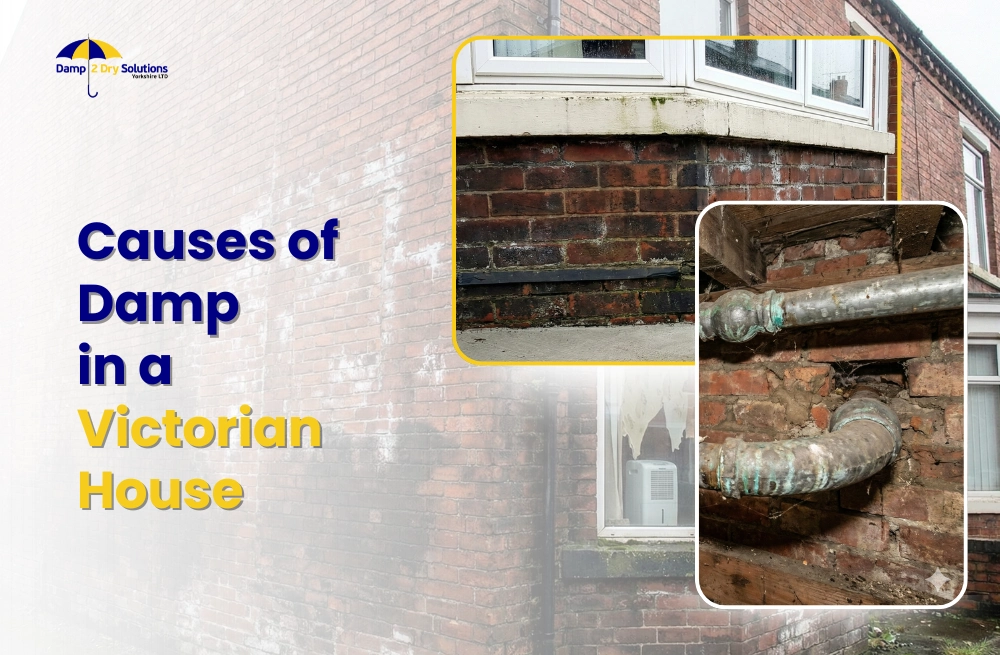
Victorian houses have charm in spades. High ceilings, solid brick walls, original fireplaces, and features you just don’t get in modern builds. But if you own one, you’ll probably know the flip side too, damp is a common and frustrating problem.
The important thing to understand is this: damp in a Victorian house isn’t usually caused by neglect. It’s usually down to how these homes were built, how they were meant to work, and how modern changes have interfered with that balance.
Let’s break down the real causes of damp in Victorian homes, so you can spot what’s happening in your own property.
1. No Damp Proof Course (or One That’s Failed)
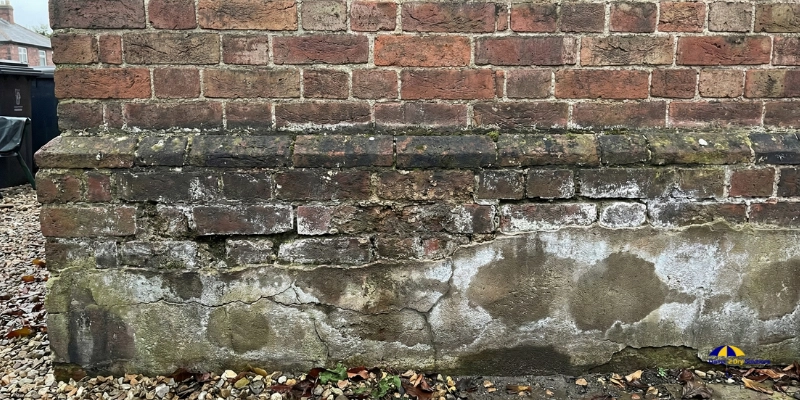
Many Victorian houses were built before damp proof courses were standard. Some have no DPC at all. Others have an early version made from slate or bitumen that’s cracked, broken, or simply stopped doing its job.
When there’s no effective barrier at the base of the walls, moisture from the ground slowly travels upward through the brickwork. This is what’s known as rising damp.
You’ll usually notice it at ground level first. Walls feel cold or damp to the touch, paint starts to bubble or flake, and skirting boards crumble or rot. There’s often a musty smell that never quite goes away, no matter how much you ventilate.
This isn’t about poor housekeeping. It’s physics and age doing their thing.
2. Solid Brick Walls with No Cavity
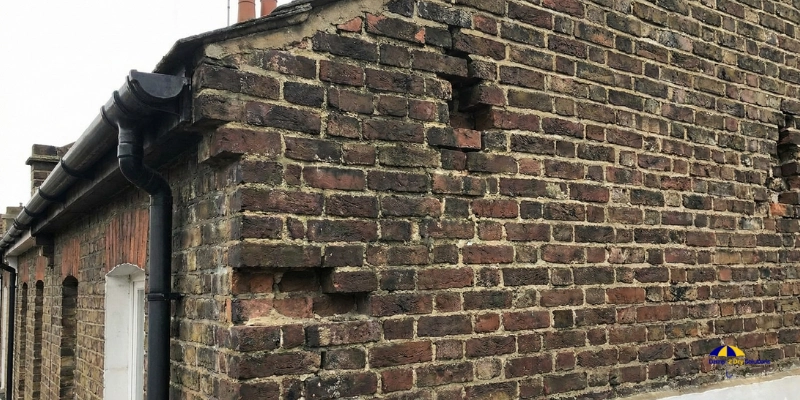
Unlike modern homes, Victorian properties were built with solid walls, not cavity walls. That means there’s no gap inside the wall to catch moisture or allow it to drain away.
Solid brick walls rely on one key principle: breathability. When rain hits the outside, some moisture is absorbed, but it should then evaporate naturally.
Problems start when something interferes with that drying process. Once moisture gets trapped inside a solid wall, it has nowhere to go. Over time, that moisture makes its way indoors, showing up as damp patches, peeling wallpaper, or staining on internal walls.
This is why damp in Victorian houses often feels persistent rather than seasonal.
3. Modern Materials That Stop Walls from Breathing
One of the biggest mistakes made in older properties is using modern materials that simply aren’t compatible with Victorian construction.
These homes were designed to breathe using lime-based mortars and plasters. When those are replaced with modern alternatives, moisture becomes trapped.
Common culprits include:
- Cement-based render on external walls
- Waterproof or “weatherproof” masonry paint
- Vinyl wallpapers
- Gypsum plaster on solid brick walls
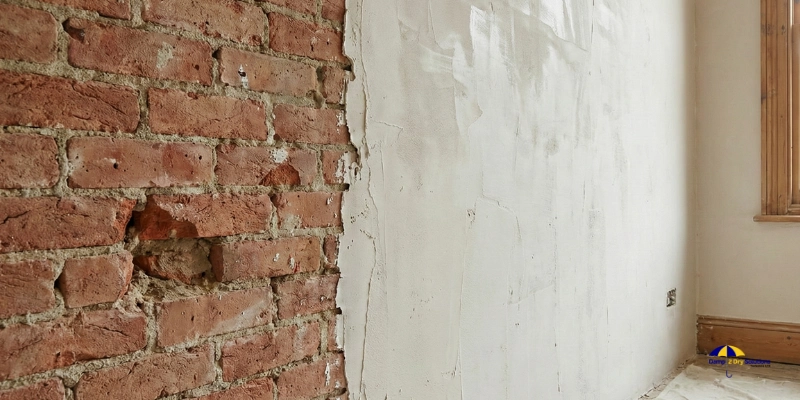
On paper, these products sound like they’ll keep water out. In reality, they often do the opposite by locking moisture in. Instead of evaporating harmlessly, damp builds up inside the wall and eventually forces its way through internally.
This is a very common cause of penetrating damp in Victorian homes.
4. Bridged Damp Proof Course
Even if your house does have a DPC, it doesn’t mean it’s working properly.
Over the years, ground levels around Victorian homes often rise. Paths get laid, driveways are added, flower beds creep higher, and external ground ends up sitting above the damp proof course.
Inside the house, plaster is sometimes taken too low, running past the DPC and giving moisture a direct route into internal walls.
This is known as DPC bridging, and it’s incredibly common in Victorian terraces and bay-fronted properties. The frustrating part is that the damp looks like rising damp, but the cause is actually something very simple and external.
5. Faulty Gutters, Downpipes, and Roof Details
Victorian houses are tough, but they don’t forgive neglect. Even small defects on the outside can lead to serious damp problems inside.
Typical issues include:
- Blocked or overflowing gutters
- Cracked or corroded cast-iron downpipes
- Loose or missing slate roof tiles
- Failing flashing around chimneys
Because solid walls absorb water, a slow leak doesn’t always show up straight away. Instead, the wall gradually becomes saturated. Months later, you might notice damp patches internally and wonder where they’ve come from.
In many cases, the problem isn’t inside the house at all, it’s rainwater that hasn’t been managed properly outside.
6. Reduced Ventilation After Modern Upgrades
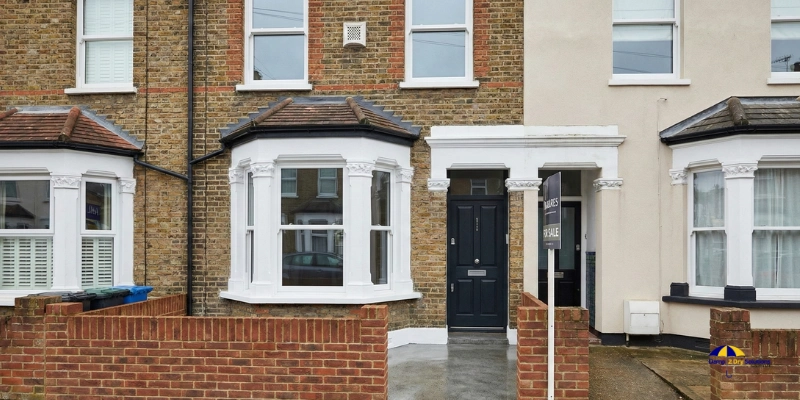
Victorian homes were originally quite draughty. As uncomfortable as that sounds, it actually helped keep moisture under control.
Modern improvements, like double glazing, blocked fireplaces, and sealed floors, often reduce airflow without replacing it with proper ventilation.
Add everyday activities like cooking, showering, and drying clothes indoors, and moisture levels rise quickly. With nowhere to escape, that moisture settles on cold surfaces, leading to condensation damp.
This is especially noticeable in:
- Bedrooms
- Bathrooms
- Kitchens
- Corners of external walls
Black mould around windows or ceiling corners is often the giveaway here.
7. Blocked or Missing Air Bricks
Many Victorian houses have suspended timber floors. These rely on airflow underneath the property to keep the joists dry.
Air bricks are supposed to provide that ventilation, but over time they often get:
- Blocked by soil or debris
- Covered by paving or paths
- Removed during renovations
When airflow stops, moisture builds up under the floor. That can lead to damp smells, mould, and timber rot, problems that are sometimes mistaken for rising damp but actually come from below the floor void.
This is one cause of damp that’s often overlooked until floorboards start to fail.
8. Ageing Plumbing and Hidden Leaks
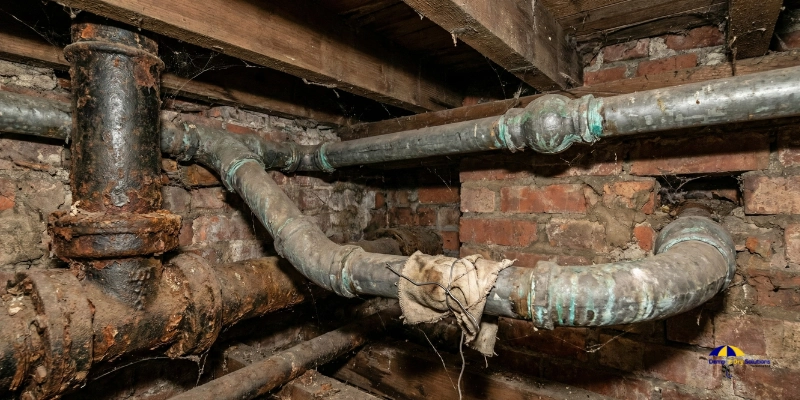
Victorian houses often still contain older pipework, sometimes lead or iron, that’s long past its best.
Small leaks behind walls, under floors, or near radiators can go unnoticed for years. Because the damp appears in one area, it’s easy to assume the problem is structural when it’s actually plumbing-related.
Localised damp patches that don’t follow typical rising or penetrating damp patterns are often a clue that a leak is involved.
Why Damp in a Victorian House Needs the Right Diagnosis
One of the biggest frustrations homeowners face is being told the same solution fits every damp problem. In Victorian houses, that’s rarely true.
These buildings don’t respond well to quick fixes or blanket treatments. Damp problems are often the result of multiple factors working together, not just one issue.
A proper assessment should always look at:
- Wall construction and materials
- Ground levels inside and out
- Ventilation
- External maintenance
- Previous alterations
When you work with the building instead of against it, damp issues become far more manageable, and far more permanent to fix. If you want the issue diagnosed properly rather than patched up, Damp2Dry Solutions (Yorkshire) Ltd. specialises in surveying and treating damp in Victorian homes, using breathable, building-appropriate methods that fix the cause, not just the visible damage.