
Damp is one of the most misunderstood issues in UK homes. Many homeowners focus on the visible signs, such as peeling paint, mould or damp patches, but the real problem often lies deeper in how the property is built.
One of the most important factors is the type of wall construction. Whether your home has solid walls or cavity walls directly affects how moisture behaves and how it should be treated.
Using the wrong damp proofing method does not just fail to solve the issue. In some cases, it can trap moisture and make the problem worse over time.
This guide explains the difference between solid and cavity walls, why damp occurs in each, and what the correct damp proofing approach looks like.
Is Damp Proofing Different for Solid and Cavity Walls?
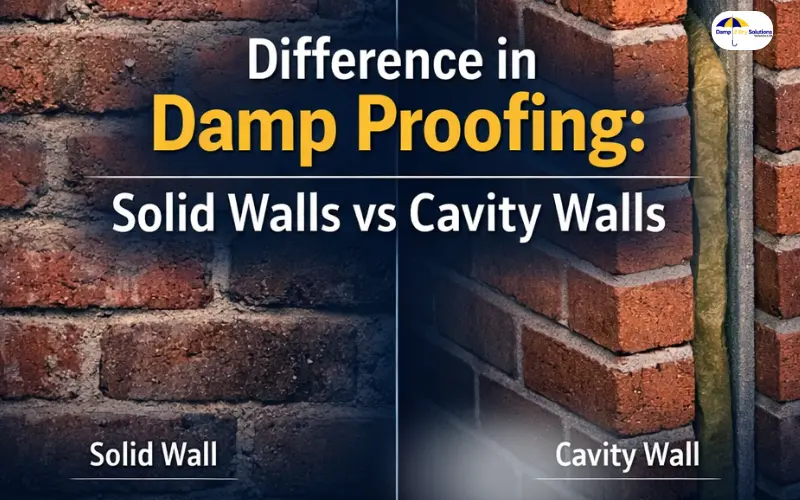
Yes, solid walls allow moisture to pass through and release naturally, so they require breathable solutions that help manage moisture. Cavity walls are designed to block moisture, so damp proofing focuses on preventing water from crossing the gap between the outer and inner walls.
| Feature | Solid Walls | Cavity Walls |
| Structure | Single layer | Two layers with cavity |
| Typical age | Pre-1920 | Post-1920 |
| Moisture behaviour | Absorbs and releases | Blocks moisture |
| Main issue | Penetrating damp | Bridging or DPC failure |
| Treatment approach | Breathable solutions | Barrier-based repair |
What Are Solid Walls?
Solid walls are typically found in properties built before the 1920s. These include many Victorian and Edwardian homes across the UK.
They are constructed using a single layer of brick or stone, without any internal cavity. This means there is no barrier to stop moisture from moving through the wall.
Because of this design, solid walls naturally absorb rainwater and then release it back into the air when conditions allow.
The main challenge with solid walls is that they are exposed directly to the weather. During prolonged periods of rain, water can soak into the wall and take time to dry out.
If the wall cannot dry properly, moisture can begin to affect internal surfaces.
What Are Cavity Walls?
Cavity walls became standard in UK construction from the 1920s onwards. Most modern homes use this type of construction.
A cavity wall consists of two layers:
- An outer wall, which faces the weather
- An inner wall, which faces the interior
- A gap between them, known as the cavity
This cavity acts as a barrier, preventing rainwater from travelling from the outside wall to the inside.
When functioning correctly, cavity walls are effective at keeping moisture out. Damp problems usually arise when this system is compromised.
What Causes Damp in Solid Walls Vs. Cavity Walls?
Understanding the cause is essential before choosing a solution.
Damp in Solid Walls
In solid wall properties, damp is often linked to external exposure. Common causes include:
- Rainwater penetrating through brick or stone
- Worn or damaged pointing
- Cracked render or external finishes
- Cold internal surfaces where condensation forms
Because there is no cavity, moisture can move directly from outside to inside.
Damp in Cavity Walls
In cavity walls, damp is usually the result of failure within the system. Typical causes include:
- Debris or mortar bridging the cavity
- Poorly installed or degraded insulation
- Damp proof course failure
- Cracks or defects allowing water to bypass the cavity
In these cases, the wall is not performing as designed.
How Damp Proofing for Solid Walls Works?
The correct approach for solid walls is not to block moisture entirely, but to manage it safely.
Solid walls need to breathe. This means allowing moisture to enter and exit naturally without becoming trapped.
Effective Solutions
- Using breathable materials such as lime-based plaster
- Repairing external brickwork and pointing
- Maintaining external render
- Improving ventilation within the property
- Balancing heating to reduce condensation
These measures help the wall dry out properly rather than holding moisture inside.
What to Avoid
Applying waterproof or non-breathable coatings to internal surfaces can trap moisture within the wall. Over time, this can lead to more severe damp problems and internal damage.
How Damp Proofing for Cavity Walls Works?
Cavity walls require a different approach. Here, the aim is to maintain the barrier between the outer and inner wall.
Effective Solutions
- Repairing or installing a damp proof course where needed
- Clearing debris or blockages within the cavity
- Addressing insulation issues that may be bridging the gap
- Repairing external defects such as cracks or failed sealant
These solutions restore the wall’s ability to prevent moisture transfer.
What to Avoid
Focusing only on internal symptoms without addressing the cavity can lead to recurring damp issues. The root cause must be identified and corrected.
When to Seek Professional Advice?
While some minor condensation issues can be managed with ventilation improvements, recurring damp should always be investigated properly.
You should consider a professional damp survey if:
- Damp returns after previous treatment
- The cause of moisture is unclear
- You notice staining beyond surface level
- There is a persistent musty smell
- You are planning to buy or renovate a property
A professional damp survey from Damp2Dry Solutions identifies the exact cause, whether rising, penetrating or condensation, so the right treatment can be applied without guesswork or unnecessary repairs.
Conclusion
Damp proofing is not a one-size-fits-all solution. The structure of your walls determines how moisture behaves and how it should be managed.
Solid walls require breathable treatments that allow moisture to move safely. Cavity walls rely on maintaining a barrier that prevents moisture from entering in the first place.
Understanding this difference is essential. Without proper diagnosis, even well-intended repairs can fail or make the issue worse.
If you are unsure what type of wall your property has, contacting Damp2Dry Solutions can help identify the cause and recommend the right treatment from the outset.
FAQs
Are solid walls more prone to damp?
Yes, they are more exposed to rain and can absorb moisture more easily. However, when maintained properly, they can perform well and remain structurally sound.
Can cavity walls still develop damp?
Yes. Damp occurs when the cavity is bridged or when defects allow water to bypass the system, especially if insulation or debris is present.
Is damp proofing cream suitable for both wall types?
It is typically used in cavity wall construction. Its suitability depends on the specific cause of damp and should always be assessed professionally before application.
Do older homes require different damp treatment?
Yes. Older properties with solid walls need breathable solutions rather than modern sealing methods, as these allow moisture to escape naturally without being trapped inside.